
If you’ve spent any time on LinkedIn or in entrepreneurial circles lately, you’ve probably seen the posts. “I wrote my book in a weekend using AI!” or “ChatGPT can write your entire book for you!” The promise is seductive—press a button, and out comes your book. Your expertise, packaged and published, with minimal effort on your part.
Here’s the truth: it doesn’t work that way.
AI is not a book writing button. It won’t capture your unique voice, your hard-won insights, or the nuanced arguments that make your methodology valuable. What AI can do is make certain parts of the writing process faster and less tedious. It can help you organize transcripts, brainstorm chapter angles, or speed up research. But the actual work of writing a book—the thinking, the strategizing, the crafting of ideas into compelling prose—that still requires a human being who knows what they’re doing.
This matters especially if you’re an expert, coach, or entrepreneur looking to write a book for your business. The quality of that book directly impacts your credibility and your brand. A generic, AI-generated book won’t position you as a leader in your field. A well-crafted book that reflects your genuine expertise will.
In this article, we’ll explore exactly where AI can make your writing process more efficient, where it falls short, and why skilled writers who use AI effectively should be valued for their expertise—not paid less because they work faster.
The Chef and the Knife—Why the Tool Needs the Master
Imagine handing a $500 Japanese chef’s knife to two people: a Michelin-star chef and someone who rarely cooks. They both have access to the same tool—razor-sharp, perfectly balanced, top-of-the-line equipment.
The amateur might produce uneven, sloppy cuts. They might not know how to hold the knife properly, which part of the blade to use for which task, or how much pressure to apply. They might even cut themselves. The knife doesn’t make them a better cook. It’s just a very sharp object in inexperienced hands.
The Michelin-star chef, on the other hand, makes that knife sing. They know technique and timing. They understand when to use a rocking motion versus a straight slice, how to position their fingers for safety and speed, and how to maintain the blade’s edge. The knife doesn’t make the chef talented—the chef makes the knife valuable.
AI is your knife. You are the chef.
If you’re a trained writer—or an expert who’s learned the craft of writing—you know story structure and narrative arc. You understand what makes content compelling versus what makes readers skim. You can look at an AI-generated paragraph and immediately sense whether it works or falls flat. You know your audience intimately: what keeps them up at night, what language resonates with them, what objections they’ll raise. You understand the nuanced goals of each chapter and how they build toward your book’s larger purpose.
When you use AI, you’re directing it with precision. You ask the right questions. You recognize when its output captures what you meant and when it’s veered into generic corporate speak. You know how to take a mediocre AI draft and transform it into something with personality and punch.
Now consider someone without that expertise using the same AI tool.
They can’t recognize good writing from bad writing. They don’t know that their introduction is burying the lead or that their chapter structure is confusing. They can’t tell when AI has produced something generic because they don’t have a refined sense of what “specific and compelling” even looks like. They don’t know what questions to ask or how to direct the tool toward their unique point of view.
The result? A 200-page document that reads like every other AI-generated book—smooth on the surface but hollow underneath. No distinct voice. No memorable insights. Nothing that makes a reader think, “I need to work with this person.”
The tool is only as good as the person wielding it.
So if AI can’t write your book for you, what can it do? While AI won’t replace your expertise or your voice, it can absolutely save you time on specific tasks that used to eat up hours of your day. The key is understanding exactly where it’s useful—and where you still need to be firmly in control.
Where AI Can Save You Time—Making Your Writing Process More Efficient
AI won’t write your book, but it can accelerate the tedious, time-consuming tasks that slow down the writing process. Think of it as having a research assistant who never sleeps and can process information at lightning speed. Here’s where that assistant actually delivers value:
Research Assistance
Remember spending hours digging through Google Scholar or scrolling through articles to find that one statistic you need? AI can cut that time dramatically. You can ask it to find relevant studies on a specific topic, pull statistics from multiple sources, or locate case examples that illustrate your point. It can summarize a 50-page research paper into key takeaways in seconds, or organize dozens of articles into themed categories so you can quickly see patterns and gaps in the research. You still need to verify the information (more on AI’s reliability issues later), but the initial legwork happens much faster.
Finding Information in Transcripts
This is one of AI’s most powerful applications for book writing. Let’s say you’ve conducted ten client interviews, recorded five podcast episodes, or transcribed hours of speaking engagements where you explained your methodology. You know there are golden stories and insights buried in those transcripts, but who has time to re-read 100 pages of conversation?
AI can scan those transcripts and pull out every mention of a specific theme, find all the client success stories, or locate that perfect quote you remember giving but can’t quite place. Instead of spending an afternoon hunting through documents, you get the relevant excerpts in minutes.
Brainstorming and Ideation
Staring at a blank page wondering how to approach a chapter? AI excels at generating options. Ask it for twenty different angles on your topic, and you’ll get a list to react to. Some will be terrible, some will be obvious, but often one or two will spark something you hadn’t considered. You can have it play devil’s advocate against your arguments, helping you strengthen them by seeing potential objections. It can suggest frameworks or structures you might not have thought of, giving you a starting point to refine.
The key here is that AI is providing raw material for you to evaluate. You’re not accepting its ideas wholesale—you’re using them to jumpstart your own thinking.
Outlining
If you’re like most experts, you’ve got notes everywhere. Voice memos, bullet points in your phone, random documents with half-formed ideas. AI can take that mess and organize it into a coherent structure. Feed it your scattered thoughts about a chapter, and it can suggest a logical flow. Give it your core themes, and it can draft chapter breakdowns showing how those themes could develop throughout the book. It can even identify gaps—places where you’ve made a claim without support, or where a transition is missing.
Again, you’re still the architect. AI is just helping you see the blueprint more clearly.
First Draft Acceleration
Here’s where AI can really speed things up: turning an outline into rough prose. You’ve got a detailed outline with all your key points. Instead of starting from a blank page, you can have AI expand those outline points into full paragraphs that you then refine, rewrite, and infuse with your voice. It won’t be good writing yet, but it gets you past blank page paralysis.
You can also generate multiple versions of tricky sections—like introductions or chapter openings—to see which approach resonates. This gives you options to react to rather than forcing you to nail it on the first try.
The Critical Distinction
Notice the pattern in all these examples? In every case, YOU are directing the tool, evaluating its output, and doing the real work of refining, choosing, and crafting. AI is handling the mechanical tasks—the searching, organizing, drafting—but you’re making every strategic and creative decision.
It’s a research assistant, not an author. It saves you time, but it doesn’t improve the quality of your thinking or your writing. That still comes entirely from you.
AI can save you hours on research and organization—that’s genuinely useful. But understanding what AI can’t do is just as important as knowing where it helps. The limitations aren’t minor inconveniences you can work around. They’re fundamental gaps that require human expertise to fill.
Where AI Falls Short—The Irreplaceable Human Elements
When you know what AI can’t do, you stop expecting it to do things it’s fundamentally incapable of. Here are the critical elements that AI can’t provide:
Your Unique Perspective and Experience
Your book’s entire value proposition rests on one thing: YOU. Your stories, your frameworks, your hard-won insights from years in the trenches. AI hasn’t spent twenty years building a coaching practice, failing and iterating on methods until you found what works, or having those lightbulb moments with clients that changed how you think about your field.
Your credibility doesn’t come from smooth prose. It comes from lived experience. When you share a client story, readers can sense whether it’s real or fabricated. When you explain your methodology, they can tell if you’ve actually used it or if you’re regurgitating something you read online. AI can string words together about leadership or sales or personal development, but it can’t replace the authority that comes from actually doing the work.
Authentic Voice
Readers don’t connect with perfect grammar and well-structured sentences. They connect with personality, quirks, and a consistent voice that feels like a real person talking to them. AI produces prose that’s smooth but generic—the written equivalent of elevator music. It’s inoffensive and technically correct, but utterly forgettable.
Your voice is what makes readers feel like they’re having a conversation with YOU specifically. Maybe you’re direct and no-nonsense. Maybe you use humor to make complex ideas accessible. Maybe you’re contemplative and ask thought-provoking questions. Whatever your style, that’s what keeps readers engaged and makes them want to work with you after they finish the book. AI can’t replicate that because it doesn’t have a personality—it’s designed to sound neutral and accommodate everyone.
Strategic Decision-Making
Every choice in your book should serve a strategic purpose. What should this book accomplish for your business? Are you positioning yourself as the premium option or the accessible expert? Which client stories reinforce your unique methodology versus making you sound like everyone else in your field? What should you reveal about your process, and what should you hold back as proprietary?
AI has no concept of your business goals or personal brand. It can’t tell you whether sharing a particular story will enhance or undermine your positioning. It doesn’t understand the difference between being helpful and giving away so much that people don’t need to hire you. These are strategic decisions that require understanding not just writing, but business and marketing.
Quality Judgment
This might be the most critical skill AI lacks: knowing when something works. Does this chapter actually deliver on what the title promises? Will this anecdote resonate with your specific audience, or is it too insider-baseball? Does the pacing feel right, or does this section drag? Is there emotional impact in this story, or does it fall flat?
An experienced writer can read a paragraph and immediately sense whether it’s compelling or mediocre. They can spot logical inconsistencies—places where you’ve contradicted yourself or where an argument doesn’t quite hold up. They can recognize when you’ve buried your best insight in the middle of a paragraph instead of highlighting it. AI can’t do any of this because it doesn’t understand quality—it only understands patterns in text.
AI is a “Yes Man” Who Hallucinates
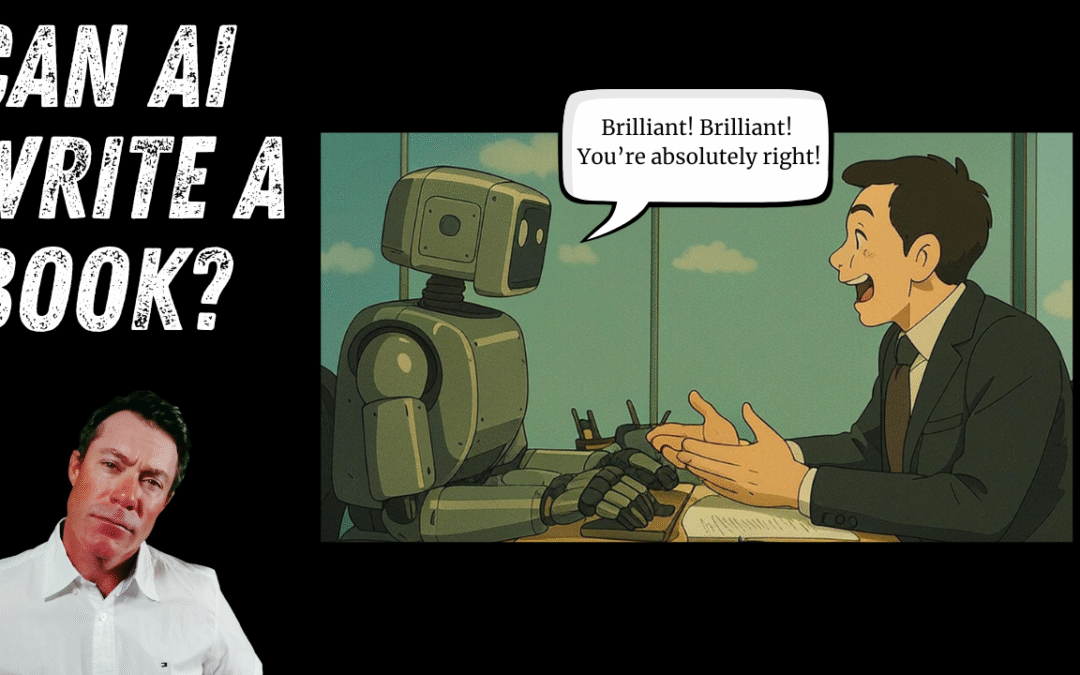
Here’s something many people don’t realize until it’s too late: AI is pathologically agreeable. It will tell you “You’re absolutely right!” about almost anything you propose. Bad chapter structure? “Great idea!” Weak argument? “That’s a compelling point!” AI won’t push back on your ideas or tell you when something isn’t working. It’s the ultimate yes man.
Even more dangerous, AI hallucinates. Confidently and convincingly. It will cite studies that don’t exist, attribute quotes to the wrong people, or invent statistics that sound plausible but are completely fabricated. I’ve seen it reference books that were never written and claim historical events happened differently than they actually did.
Here’s an example: Ask AI about research on a specific topic, and it might tell you, “According to a 2019 Stanford study…” and provide detailed findings. Sounds authoritative, right? Except when you try to track down that study, it doesn’t exist. AI didn’t lie intentionally—it’s not capable of intent. It simply generated text that fit the pattern of how research citations usually look.
An experienced writer knows to verify everything. They have the judgment to spot when something sounds “off”—when a statistic seems too convenient or a quote doesn’t match what they know about the person who supposedly said it. Someone without that expertise takes the hallucinations at face value and publishes false information, damaging their credibility.
You need critical thinking and subject matter expertise to catch these errors. AI won’t catch them for you—it created them.
The Editing and Refinement Process
Developmental editing requires understanding what the book is supposed to accomplish and whether it’s actually accomplishing that. Line editing requires an ear for rhythm, style, and the subtle differences that make prose either engaging or wooden. AI can suggest changes—move this paragraph here, combine these sentences—but it can’t evaluate whether those changes are improvements. It doesn’t know if the new version is better or worse because it has no concept of “better.”
A skilled editor reads your work and thinks, “This chapter promises to teach X, but it actually delivers Y,” or “This sentence is technically correct but sounds clunky when read aloud.” AI can’t make those judgments.
The Bottom Line
AI can produce words quickly. It can generate pages and pages of smooth, grammatically correct text. But it can’t produce a GOOD book with the click of a button. It can’t give you the perspective, voice, strategic thinking, or quality judgment that makes a book valuable. And perhaps most importantly, it definitely can’t tell you when you’re wrong. It will cheerfully agree with your worst ideas and confidently present false information as fact.
The expertise still has to come from you.
So we’ve established that AI can speed up certain tasks, but it can’t replace human expertise, judgment, or voice. This raises an important question, especially if you’re hiring a writer or positioning yourself as a writing professional: if AI makes the process more efficient, shouldn’t that mean lower fees?
Why Efficiency Shouldn’t Mean Lower Value
There’s a paradox at play here. Yes, AI might help a skilled writer work faster on certain tasks. But that doesn’t diminish the value they’re providing—it actually proves how valuable their expertise is. Let me explain.
What Clients Are Really Paying For
When you hire a writer or invest your own time in writing a book, you’re not paying for hours spent typing. You’re paying for something much more valuable:
Expertise and judgment. Knowing what to include and what to cut. Understanding how to structure a chapter for maximum impact. Recognizing when an idea needs more development and when you’re beating a dead horse.
Strategic thinking. Understanding how this book fits into your business ecosystem. Knowing whether this book should position you as the premium authority or the accessible guide. Deciding which aspects of your methodology to reveal and which to reserve for paid clients.
Quality control. The ability to distinguish between good and mediocre content—and critically, to catch AI’s mistakes before they end up in print. Spotting hallucinations, recognizing weak arguments, and elevating the prose from “fine” to “compelling.”
Your unique methodology. The frameworks and systems you’ve developed through years of work. AI didn’t create those. You did. The book is just the vehicle for sharing them.
Taste and discernment. Curating and crafting content that genuinely serves the reader rather than just filling pages. Knowing which story to tell and which to leave out. Understanding when to go deep and when to stay high-level.
Fact-checking and verification. Catching those confident hallucinations and ensuring every claim in your book is accurate. This alone is worth the investment.
None of these things take less expertise because AI exists. If anything, they require more discernment because now you’re also managing and quality-checking AI output.
The Comparison: Other Professions
Think about other skilled professions that have adopted technology tools:
Graphic designers use templates, stock photos, and AI-powered design tools. Are they paid less than designers twenty years ago? No. You’re paying for their eye, their understanding of visual hierarchy, their ability to translate a brand into compelling visuals.
Accountants use sophisticated software that automates calculations that used to take hours. Are they cheaper? No. You’re paying for their expertise in tax strategy, their understanding of regulations, their ability to spot issues the software would miss.
Architects use CAD programs instead of drafting by hand. Does that make them less valuable? No. You’re paying for their design thinking, their understanding of how spaces function, their ability to solve complex structural problems.
The tool doesn’t diminish the expertise. It amplifies what the expert can accomplish.
The Reality: Efficiency Lets Skilled Professionals Do More
Here’s what actually happens when a skilled professional adopts efficiency tools: they can deliver more value in less time.
A writer who can complete your book in six months instead of twelve isn’t worth half the fee. They’re worth the same fee—or potentially more—because they can take on additional projects, stay more engaged with each one, and spend less time on tedious tasks and more time on the strategic, creative work that actually matters.
You’re not paying for time. You’re paying for their ability to ask the right questions, make the right calls, and deliver a book that actually works for your business goals. That skill doesn’t get cheaper because they have better tools.
For the Expert or Entrepreneur
If you’re hiring a writer to help with your book, you should absolutely want someone who can use AI efficiently. They’ll deliver your book faster. They’ll do better research in less time. They’ll organize your ideas more quickly.
But you’re still paying for their judgment, their craft, and their experience. The tool doesn’t replace the expert—it just removes some of the grunt work so they can focus on what really matters: making your book great.
The chef with the better knife is still the better chef.
The AI Book Reality
Let’s bring this full circle: AI is a time-saving tool, not an author. It can help you organize transcripts, speed up research, and generate rough drafts to refine. But it cannot write your book for you—not if you want that book to actually be good.
For skilled writers and authors, this is an opportunity. AI makes certain parts of the process more efficient without improving or replacing the craft itself. You still need to know what makes compelling content, how to structure an argument, when a story works and when it doesn’t. AI just removes some of the tedious legwork so you can focus on the work that actually requires expertise.
But here’s the warning for those without writing experience: AI won’t magically create a quality book. It will confidently produce page after page of smooth, generic prose that sounds authoritative but lacks substance. It will hallucinate facts, agree with your worst ideas, and lead you to believe you’ve written something valuable when you’ve actually created something forgettable. Without the judgment to recognize good writing from bad, you’ll end up with a 200-page document that damages your credibility rather than building it.
The future of book writing isn’t “AI replaces authors.” It’s that the best books will come from experts who understand both their subject matter AND how to leverage AI for the tedious tasks—while maintaining full control of the creative and strategic decisions.
Your book is still YOUR book. Your expertise, your voice, your frameworks, your value. AI just helps you move faster through the mechanical parts—the searching, the organizing, the first-draft grunt work.
But the quality? The insight? The credibility? That still comes entirely from you.
And that’s exactly how it should be.
For Experts, Coaches & Entrepreneurs
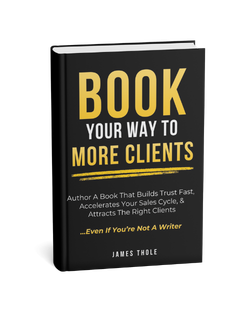
Book Your Way to More Clients
The complete system for writing, publishing, and turning a book into your best client-generating tool. Get your digital copy plus 6 free bonuses for just $7.
Get the Book for $7 →Instant access · 6 free bonuses · 100% money-back guarantee
Ready to write your business book?
Learn how business book ghostwriting works, explore book coaching, or book a quick call to talk through your idea.