
The Right Title & Subtitle: Your Book’s First Pitch to Future Clients
Your book’s title gets approximately three seconds to capture attention in a crowded marketplace. Get it right, and it draws premium clients to your expertise effortlessly. Get it wrong, and months of writing effort disappear into obscurity.
You’ve done the strategic work—identified your topic, chosen your angle, and crafted your promise. But none of that matters if prospects never pick up your book in the first place. That critical decision happens in roughly three seconds when they glance at your title on Amazon or see it mentioned in conversation.
Picture Warren Buffett’s assistant skimming through a pile of books, giving each title just a three-second evaluation before deciding what’s worth his time. That’s exactly how your ideal clients—busy professionals with packed schedules—assess whether your book deserves their attention.
Your title and subtitle aren’t just cover elements—they’re your book’s first pitch to future clients, and quite possibly the most important marketing decision you’ll make in your entire publishing journey.
Why Your Title Is Make-or-Break for Business Success
Your title works harder than any other piece of marketing you’ll create. It must accomplish multiple objectives simultaneously in just a few words that someone can process in three seconds.
What Your Title Must Accomplish
Signal Understanding: Demonstrate that you grasp your reader’s specific problem and context
Suggest Solutions: Indicate you have credible answers to their challenges
Create Curiosity: Generate enough interest to make them want to learn more
Position Authority: Establish you as the expert they should trust
How Business Professionals Evaluate Titles
Your ideal clients don’t browse casually like fiction readers drawn by clever wordplay. They search with purpose, looking for titles that trigger specific psychological responses: relevance, credibility, and curiosity.
A consumer book might succeed with playful titles like “Chicken Soup for the Soul.” But business books need to convey immediate value. Think less “witty wordplay” and more “here’s your solution clearly stated.”
Professional readers evaluate titles through a filter of skepticism born from experience—they’ve been disappointed by overpromising books before. Your title must pass their credibility test while standing out from thousands of competing options.
The Five Title Types That Attract Business Clients
Here are five proven title structures that consistently connect with business professionals seeking solutions. Consider which aligns best with your topic, angle, and promise.
Title Type #1: The Promise Title
The Promise Title tells prospects exactly what outcome they’ll achieve through your expertise.
Examples:
- “The Seven-Figure Law Firm”
- “The $100M Practice”
- “Never Chase Clients Again”
Why It Works: Clear outcomes create immediate interest. Prospects can instantly evaluate whether your promise matches their aspirations.
Key Consideration: Choose targets that are ambitious yet realistic. A million-dollar practice makes sense for financial advisors; promising billionaire status strains credibility and triggers skepticism.
Title Type #2: The Framework Title
The Framework Title suggests you’ve systematized your expertise into a repeatable, teachable methodology.
Examples:
- “The Value Acceleration Method”
- “The Trust-Based Acquisition System”
- “Strategic Revenue Architecture”
Why It Works: Frameworks signal proven processes rather than one-time successes or untested theories. This resonates with professionals seeking reliable systems.
Best For: Consultants and advisors who’ve refined their approach through multiple client engagements and can demonstrate consistent results.
Title Type #3: The Contrarian Title
The Contrarian Title challenges conventional thinking and grabs attention by questioning widely accepted assumptions.
Examples:
- “Why Top Producers Fail”
- “The Productivity Paradox”
- “Against Scaling: The Small Firm Advantage”
Why It Works: Creates cognitive dissonance that demands resolution. Professionals are curious about what they might be missing.
Critical Caution: Challenge beliefs your audience is actually ready to question. Don’t be contrarian just for attention—ensure you’re addressing real frustrations with existing approaches.
Title Type #4: The Category Creator
The Category Creator combines familiar concepts into something that feels new, positioning you as an innovator defining the conversation.
Examples:
- “Strategic Risk Architecture”
- “Wealth Preservation Engineering”
- “Client Attraction Physics”
Why It Works: Creates the impression of thought leadership while remaining comprehensible. The best category creation feels like it’s always existed, even though you’re the first to name it.
Execution Key: Balance innovation with familiarity. Too weird becomes gimmicky; too familiar becomes generic.
Title Type #5: The Pain Point Title
The Pain Point Title targets specific frustrations and promises immediate relief from pressing problems.
Examples:
- “Never Chase Clients Again”
- “Stop Competing on Price”
- “End the Feast-or-Famine Cycle”
Why It Works: Speaks directly to what keeps your prospects awake at 3 AM. Creates instant recognition and emotional connection.
Targeting Strategy: Address widespread struggles specific to your niche—like hourly billing constraints for lawyers or unpredictable revenue for consultants.
The Subtitle Formula That Seals the Deal
If your title hooks prospects, your subtitle is the precision strike that transforms interest into commitment. A powerful subtitle identifies your audience, clarifies the benefit, and motivates action while filtering out poor-fit prospects.
The Four-Part Subtitle Formula
Part 1: Who It’s For “For Wealth Managers Serving High-Net-Worth Clients…” or “How Executive Coaches Developing Leadership Teams…”
Be specific—not “professionals” but “small business owners facing cash flow issues” or “mid-level managers in tech firms.” Specificity attracts while filtering.
Part 2: What They Get “Double Your AUM…” or “Boost Team Productivity by 40%…” or “Achieve Stress-Free Leadership…”
State the compelling outcome that aligns with their goals. Make it concrete enough to be believable yet attractive enough to motivate action.
Part 3: How Long (Optional) “In 24 Months…” or “Within 90 Days…”
Include timeframes only if you can support them with evidence. Arbitrary deadlines damage credibility when prospects sense they’re unfounded.
Part 4: How You Do It “Using the Trust-Based Acquisition System” or “Through Strategic Risk Mapping”
Preview your unique method while reinforcing that you have a proven system, not just theory or hope.
Complete Subtitle Examples
With Timeline: “The Wealth Advisory Authority: How Established Financial Advisors Can Build a $100M AUM Practice in 24 Months Using the Trust-Based Client Acquisition System”
Without Timeline: “Lead Generation Mastery: How B2B Sales Consultants Can Fill Their Pipeline with Qualified Prospects Using LinkedIn”
Your subtitle often echoes your book’s promise from Foundation #3, condensing that commitment into a public-facing statement that grabs attention while previewing the value you’ll deliver.
The Non-Negotiables and Fatal Mistakes
Must-Have Elements
Clarity Over Cleverness: “The Wealth Preservation Strategy” beats “The Eagle’s Fortune” every single time. Professionals want value they can grasp instantly, not puzzles to decode.
Credibility Cues: “The Enterprise Value Optimization Framework” shows you speak their professional language. “Better Business Results” feels too elementary.
Audience Targeting: “The Asset Allocation Authority” speaks directly to financial advisors. “Making More Money” could apply to anyone—and therefore appeals to no one specifically.
Transformation Hint: “The Seven-Figure Service Professional” suggests meaningful change without unrealistic promises.
Shareability: “You should read The Rainmaker’s Blueprint” flows naturally in conversation. Bulky, complicated titles don’t get recommended because they’re instantly forgotten.
Fatal Mistakes That Destroy Credibility
Puns: “Dollars and Sense” or “A Taxing Journey”—playfulness erodes professional authority and signals lack of seriousness.
Generic Terms: “Business Success Strategies” or “The Leadership Guide”—these blend into background noise and communicate nothing distinctive.
Jargon Overload: “Epistemological Enhancement Methodologies”—aim for intelligent precision, not pretentious complexity.
Hype Language: “Unlimited Wealth Secrets” or “Guaranteed Millionaire System”—trust trumps flash with experienced professionals.
Trendy Buzzwords: “Web3 Growth Hacks” or “AI Money Secrets”—these date quickly and feel gimmicky rather than substantial.
The Title Validation Process
Before committing to your title and subtitle, test them rigorously:
The CEO Desk Test
Would a senior executive proudly display this book on their desk? If you’d be embarrassed to have it visible during important meetings, refine it.
The Publication Test
Could this title be featured in a serious industry publication without seeming out of place? Professional journals and business magazines have standards—match them.
The Conversation Test
Does it roll off the tongue naturally when recommending to colleagues? “You should read [your title]” should feel comfortable, not awkward.
The Market Test
Show your top title options to 5-10 people in your target market. Don’t ask if they like it—ask if they would buy a book with that title. Their honest purchasing intent reveals more than polite opinions.
Your Title Development Action Plan
Week 1: Generate Options Brainstorm five titles using different types—promise, framework, contrarian, category creator, and pain point. Don’t judge yet; just create options.
Week 2: Craft Subtitles For your top three titles, create three different subtitle variations using the four-part formula. Test them by reading aloud—which flows best and feels most compelling?
Week 3: Market Validation Share your top combinations with target market representatives. Ask specifically: “Would you buy a book with this title?” Record their unfiltered reactions.
Week 4: Final Refinement Based on feedback, refine your strongest option. Ensure it passes all validation tests while authentically representing your expertise and promise.
The Three-Second Window That Determines Everything
Your title and subtitle are your book’s first—and often only—introduction to future clients. In those critical three seconds, prospects decide whether your expertise deserves their attention or gets ignored among thousands of alternatives.
Make every word count. Prioritize clarity over creativity, credibility over catchiness, and transformation over trendiness. Your title isn’t creative writing—it’s strategic positioning that determines whether months of writing effort translate into business growth or digital obscurity.
Get this foundation right, and your book becomes immediately recognizable as the solution your ideal clients have been seeking. Get it wrong, and even the most brilliant content never gets the chance to attract the clients who need it most.
For Experts, Coaches & Entrepreneurs
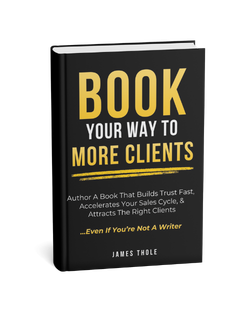
Book Your Way to More Clients
The complete system for writing, publishing, and turning a book into your best client-generating tool. Get your digital copy plus 6 free bonuses for just $7.
Get the Book for $7 →Instant access · 6 free bonuses · 100% money-back guarantee
Ready to write your business book?
Learn how business book ghostwriting works, explore book coaching, or book a quick call to talk through your idea.